Health News – September 2024
6 September 2024
Health News – November 2024
31 October 2024Dear SCH Reader, Welcome to your autumnal October edition of your favourite heath news round-up, with some resonating articles from COVER Magazine, Metro newspaper, The Times & The Telegraph for your perusal. With those summer days now behind us, before we face the harsher realities of winter we can enjoy these balmy mid-season autumnal days, so grab yourself a brew and enjoy this month’s News!
3rd COVER Magazine – Record Quarter for Private Healthcare
Data released by the Private Healthcare Information Network (PHIN) showed that Q1 saw more private healthcare admissions than any quarter ever in the UK, with 238,000 patients admitted.
The data also showed that the use of private medical insurance (PMI) had also grown, with the second consecutive record quarter. Q1 2024 had 168,000 insured patients admitted, compared to 161,000 in Q4 2023. The growth represents a 6% increase in those utilising PMI on the same quarter in 2023. The number of PMI-funded admissions grew in every region across England, with London (61,000) and the South East (31,000) having the most PMI admissions. Of those insured admissions, 88,095 were males, an increase of 7% compared to Q1 2023. 79,850 were females, an increase of 6% when compared also to Q1 2023.
9th Metro Newspaper – Day of Truth over Mental Health ‘Cull’
Devasted parents hope they will finally find out why thousands of their children died while receiving care from failing mental health facilities over more than two decades.
The Lampard Enquiry will begin to investigate the deaths of around 2,000 people who were either inpatients at NHS-funded independent clinics in Essex or who died within three months of leaving between 2000 and 2023.
Matthew Leahy, 20, was found lifeless at a facility days after reporting he had been raped there. Police visited but no action was taken. A jury inquest in 2015 identified ‘multiple failings’ and an ombudsman’s report five years later said the trust involved was guilty of a string of errors. Staff did not follow the trust’s own policy following the allegation and his care plan was falsified and written after his death.
Mum Melanie Leahy called the deaths ‘a cull – it’s a cull of our most vulnerable, our most gentle, our most needy’. She said she hoped the inquiry – which can compel witnesses to attend – will have access to hidden documents and result in ‘no more deaths.’ Mrs. Leahy, who helped lead a fight for the inquiry to take place, added: ‘It’s been a battle to get this far.’ And she warned the number of deaths linked to the scandal will grow. ‘I think we’re going to find a lot, lot more,’ she said. ‘It’s absolutely horrendous.’
‘We want to ensure every aspect of mental health services here in Essex is scrutinised, then ultimately that any learning is pushed across the country because we know the system is failing not just here but everywhere.’ Lisa Morris’s son Ben, 20, also died at the Linden Centre in Chelmsford, in 2008. A wardrobe in his room identified as low risk a year before was later fixed to a wall, making it dangerous.
The trust was prosecuted on health and safety grounds and fined £1.5million. A judge talked of ‘interconnected failures’ at the heart of the tragedy. Mrs. Morris said she hoped the inquiry would lead to ‘good care for the next generation of mental health patients – I don’t want to see this happen to any other families, ever.’
Martha Gaskell, whose daughter Marlon Turner, 40, was found hanged at home in 2013, said: ‘I know it’s not going to bring her back but I’d like to see accountability for what the failings were.’ Marlon – a mum-of-four – had been discharged from the The Lakes in Colchester three months earlier. A coroner said she was concerned about safety after discovering that a note of a phone call from Ms. Turner’s solicitor ‘remained on a slip of paper, unread, in a pigeon hole until sometime the next day.’ Mrs. Gaskell, 68, said: ‘I’d been begging for them to take her into hospital, they wouldn’t. I hope anybody else that has to go through the mental health system will not be let down.’
Solicitor Priya Singh, whose firm represents 126 families, said: ‘This is as important as the Post Office inquiry, as the infected blood inquiry, as the Covid inquiry. It must get to the bottom of how these people died, to allow families some closure and understanding of why their loved ones were lost whilst under the state’s care.’
The inquiry began in 2021 but so few stadf agreed to come forward – 11 out of 14,000 – that it was upgraded to statutory with former barrister Baroness Kate Lampard appointed chair. It is being held in Chelmsford to investigate failings in Essex NHS trusts but is likely to have implications for mental healthcare nationally.
Baroness Lampard previously led the NHS investigation into sex crimes of paedophille BBC star Jimmy Saville. Paul Scott, chief executive of Essex Partnership University NHS Foundation Trust, said: ‘We know how painful this time will be for those who lost loved ones. Are thoughts are with them. We will continue to do all we can to support Baroness Lampard and her team to provide answers that patients, families and carers seek.’
11th The Times – Darzi Report’s Diagnosis for NHS is Bleak – but Not Terminal
It is a good job Lord Darzi of Denham is used to working at speed. The pioneering surgeon, who is based at Imperial College London, was given only eight weeks to produce a comprehensive 163-page report on where the NHS had gone wrong since 2001. After pouring over hundreds of documents and carrying out frontline visits, his diagnosis for the health service was bleak but not terminal. “The NHS is in critical condition, but its vital signs are strong,” he concluded. “It took more than a decade for the NHS to fall into disrepair so it’s going to take time to fix it. But we in the NHS have turned things around before, and I’m confident we will do it again,” Darzi said. Here are the key findings of the report, which is set to underpin the government’s NHS policy over the next decade.
Crumbling Buildings
The NHS was “starved of investment” in new buildings and technology as a result of austerity, the report said. Darzi said the 2010s were “the most austere decade” since the NHS was founded in 1948, with spending flatlining in real-terms until 2018. As a result, buildings have been allowed to crumble into a state of disrepair as the capital budget was repeatedly raided to plug holes in day-to-day spending. Compared with similar nations, the NHS has been “starved” of £37 billion in capital investment. This money could have been used to build 40 promised hospitals, or refurbish every GP surgery in the country. The report said: “Instead, we have crumbling buildings, mental health patients being accommodated in Victorian-era cells infested with vermin with 17 men sharing two showers, and parts of the NHS operating in decrepit Portacabins.”
The failure to invest in capital is also damaging productivity: NHS staff are reliant on old scanners and computers, which frequently break down and stop them seeing patients. The NHS has breached its social contract with the British people by consistently breaking its promises to treat them on time, thee report said. Since 2015 it has routinely missed almost every single target for A&E, cancer and hospital waiting times. There are now 7.6 million people waiting for routine hospital treatment, up from 2.4 million in 2010.
Sicker Population
Record NHS waiting times are partly a result of rising demand from a “population in distress”, the report said, as millions more develop chronic illnesses. The review described a “surge” in patients suffering multiple long-term illnesses such as diabetes, high blood pressure and chronic breathing difficulties, linked to obesity and poor lifestyle. The report will be used to support calls for strict preventative measures, including bans on junk food advertising and smoking in pub gardens, as an essential step to reduce demand on the NHS.
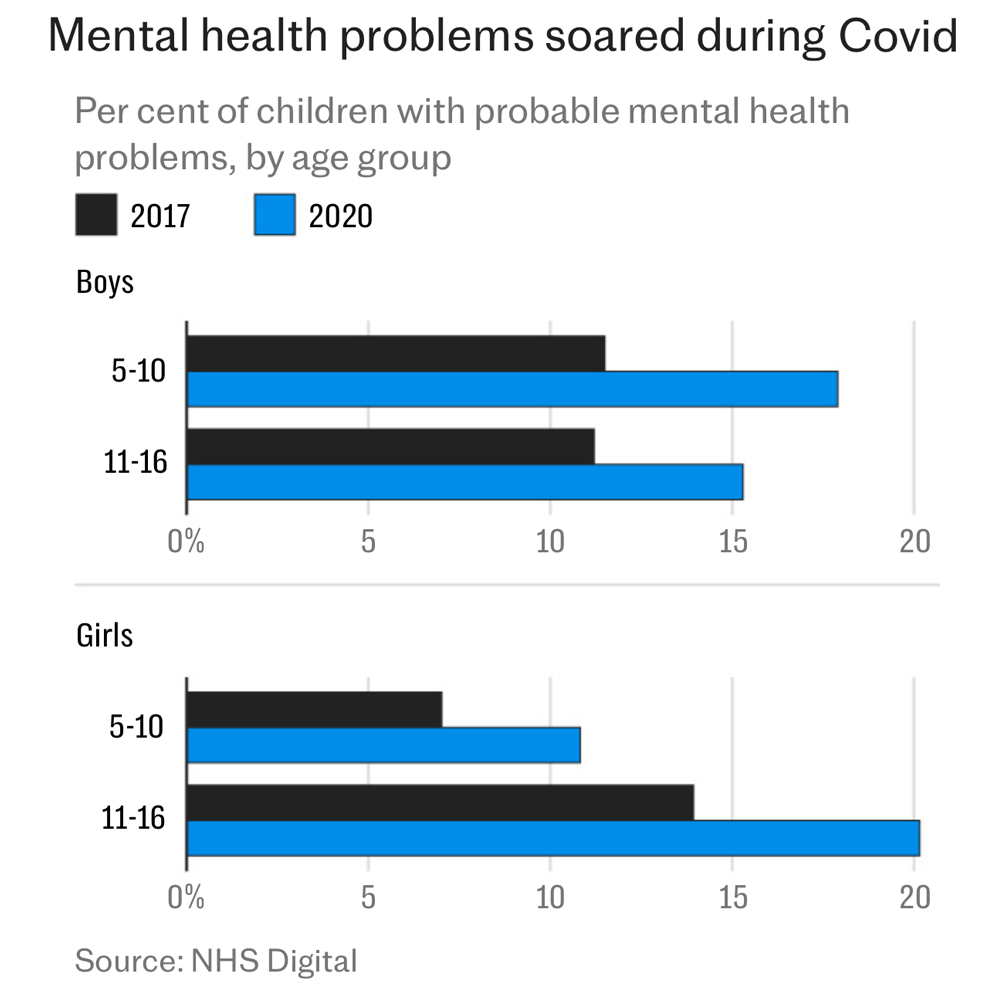
Another key theme is worsening mental health, particularly among young people. There are now 120,000 mental health referrals in young people each month, up from 40,000 in 2016. Meanwhile the prevalence of depression among adults has doubled since 2012. Rising mental health problems, and the NHS’s inability to cope, is a key factor in explaining why 2.8 million people are off work with long-term sickness. The report argued that the NHS should do more to help people back to work in a “virtuous circle” that would in turn grow the economy.
Unproductive Hospitals
Too much money is being sunk into hospitals, which have failed to match the increased spending by treating more patients or carrying out more operations. The report said that the hospital workforce had risen by 17 per cent between 2019 and last year. Yet output has not risen at nearly the same rate, leading to a large “productivity gap”, which means waiting lists remain stubbornly high. Darzi said the “central problem” was that the increase in staff had not been accompanied by upgrading infrastructure, such as diagnostic scanners or operating theatres. There is no point hiring more surgeons if they do not also have more equipment and space to work with.
This hospital funding has “come at the expense of other settings of care”, the report said, with community services and GPs facing cuts to staff and funding, which in turn pushes more patients towards overcrowded A&Es. The NHS budget “is not being spent where it should be” and too great a share is being “spent in hospitals, too little in the community, and productivity is too low.”
Between 2006 and 2022 the share of the NHS budget spent on hospitals increased from 47 per cent to 58 per cent. Between 2009 and 2023 the number of nurses working in the community fell by 5 per cent. But during the same period, hospital nurses working with adults increased by 35 per cent. Darzi said this trend must be reversed, with care “delivered in the community, closer to where people live and work, and that hospitals should be reserved for specialist care.”
Social Care Collasping
Although Darzi was not asked to examine social care, his report said it was “impossible” to understand the NHS without looking at the crisis in that sector, which was placing “an increasingly large burden on families and on the NHS.”
He said the “dire state of social care” meant 13 per cent of NHS beds were occupied by people waiting for social care support or care in “more appropriate” settings. He wrote: “Whereas the NHS is funded by taxpayers and free at the point of need, social care is means-tested and only provided to those with the greatest need and least ability to pay. With each passing year, the gap grows between those in need and those receiving publicly funded care. This places an increasingly large burden on families and on the NHS.”
“The impact on the NHS has been more people staying in hospital for longer than their medical needs require them to be there. This means older people have been stuck in acute hospital wards rather than in facilities better suited to their needs (so-called delayed discharges). It is apparent that the different economic models between the NHS and social care is driving the most expensive outcome – people spending time in hospital when there is no medial reason for them to be there – that is also a poorer experience for elderly people and their families.”
Scorched-Earth Reform
Darzi’s report criticises decision-making under the Tories and the coalition government, including the impact of austerity and the reorganisation of the NHS under Andrew Larnsley, then the health secretary, in 2012.
In his report, Lord Darzi said the “Health and Social Care Act of 2012 was a calamity without international precedent. It proved disastrous.” He added: “In the last 15 years, the NHS was hit by three shocks – austerity and starvation of investment, confusion caused by top-down reorganisation, and then the pandemic, which came with resilience at an all-time low. Two out of three of those shocks were choices made in Westminster.”
Darzi said the 2012 reforms represented a “scorched-earth approach to health reform” as it dissolved NHS management structures in a “uniquely complicated piece of legislation.” The reforms established more than 300 new NHS organisations, which led to “institutional confusion”, from which the NHS was still recovering.
Technology
The NHS was “still in the foothills” of the digital revolution, the report found. Technology that has been used in the private sector for 15 years has still not been introduced in the NHS, worsening waiting lists.
Darzi also called for NHS data to be used in clinical research, adding: “With its deep and broad datasets, and the global AI hub that has emerged in the UK, the NHS could be at the forefront of this revolution, with NHS patients the first to see the benefits. But to capture those opportunities, there will need to be a fundamental tilt towards technology.”
21st The Telegraph – How Covid Destroyed our lives, from Newborns to Pensioners
A growing body of evidence shows that the impact of lockdown continues to affect every generation – and will do for decades to come. In some ways, the trauma of that time was swiftly forgotten. We moved on with relief, and shudder today at those distant, bewildering memories of social distancing.
“We’ll probably be studying the impact of this for as long as we live,” says Adam Hampshire, professor of cognitive and computational neuroscience at King’s College London (KCL). A startling reminder of the long-term fallout of those unprecedented restrictions came just this week, as new figures revealed that the number of people on sickness benefits rose to 3.9m, an increase of almost 40 per cent since the pandemic first hit.
That came hard on the heels of news this month that lockdowns may have caused the premature ageing to teenagers’ brains. Research from the University of Washington found the measures resulted in “unusually accelerated brain maturation” in adolescents, and that this was far more pronounced in girls than boys. While the average acceleration in the development of the male adolescent brain was 1.4 years, for females it was 4.2 years. Across every age group, a wide range of effects already been mapped. Experts believe that more will emerge in time.
Young Children
The first 1,001 days of a child’s life are deemed critical for their cognitive, emotional and physical development. Research suggests that many of infants born into the abnormal state of affairs seen in 2020 and 2021, are developmentally behind where they should be. In 2022, an Irish survey (found babies in lockdown were slower than usual to reach milestones such as talking, pointing and waving goodbye. By the age of one, only 77 per cent of pandemic babies could say one meaningful word, compared to 89 per cent born before Covid. Whilst almost all (93 per cent) of those born pre-pandemic could point, only 84 per cent of lockdown babies could do so by 12 months.
Stats show that for primary school children meeting expected standards of reading, writing and maths was only 59 per cent in both 2023 and 2022 – down from 65 per cent in 2019. For Dan Paskins, interim executive director at Save the Children, such longer term effects are hardly surprising. “There’s been some really rapid regression. There’s a school in Birmingham where more than half the children entering reception were still wearing nappies”, says Paskins. “Before the pandemic there might have been one or two.” Across the country, teachers now say almost a quarter of children in their reception class are not toilet trained, according to a survey by the Kindred Squared charity, published in February.
Although decline in school readiness has been a growing trend since well before the pandemic, lockdown is thought to have exacerbated it. Without intensive support, things are likely to get worse for these children over time, not better, Paskins warns. “You’re less likely to learn and get good exam results and a good job. We’re going to be seeing the impact of this for decades to come.”
Teenagers
Holed up in their bedrooms for hours each day, with just social media for company, teenagers missed crucial face-to-face interaction with peers at a formative, and quite often turbulent, life stage. Disruption to their education and prolonged social isolation “exposed young people to many known risk factors for mental illness, raising serious concerns about their wellbeing,” researchers at KCL wrote in 2022.
School absences have risen sharply since the pandemic, with one in five (19.4 per cent) pupils classed as being “persistently absent” last autumn, meaning they missed over 10 per cent of school days – Up from 10.9 per cent from before the pandemic. Although mental health doesn’t explain every case, it’s notable that more than 18,000 students in England, Wales and Northern Ireland had dropped out of university courses by February 2022, being an increased of more than 4,000 compared with the same point in 2021, and 3,000 more than the figures for February 2019, according to experimental Student Loans Company data.
Young Adults
As with children, the physical risks to healthy young adults posed by Covid itself were far smaller than for older generations, however the impact on them to protect the more vulnerable sections of society was serious.
Undergraduates missed out on rite of passage that the cut and thrust of student life represents. Twenty-somethings entering the jobs market while working from home missed out on crucial opportunities to learn from more experienced colleagues. This month, an alarming snapshot of Generation Z graduates emerged in a report by the NHS Confederation and Boston Consulting Group (BCG): tens of thousands are moving straight from university into long-term sickness, they found. In 2021-22, almost 63,400 people aged 16 to 24 followed this trajectory, up from less than 37,000 in 2019-20. Making it the fastest-growing group of economically inactive adults, according to the report’s author, Raoul Ruparel, director of BCG’s Centre for Growth. The surge was attributed largely to an “acceleration” of mental health conditions post-Covid.
The long-term health effects of increased alcohol or drug use prompted by lockdown are yet to fully hit home. But the excess drinking alone could lead to thousands of extra deaths and hospital admissions over the next 20 years, research from NHS England and the University of Sheffield has indicated. Young adults aged 25 to 34 who were already heavier drinkers than their peers pre-pandemic were more likely to up their alcohol intake still further during lockdown than any other age group, the study found.
“Roll forward, and all the groups that were drinking more during the pandemic have continued drinking more since the pandemic, and in some cases, it’s increased,” says Richard Piper, chief executive of Alcohol Change UK. “The reason is that alcohol is an addictive substance. It’s hard to bring it down. So you will find a lot of those home drinkers have never returned to pre-pandemic levels and have often increased their drinking.”
The Middle-Aged
Perhaps counterintuitively, this cohort was already drinking more than young adults before the pandemic. Less surprisingly, lockdowns did little to make them stop, in most cases. These are the at-home drinkers, typically parents in their late 30s, 40s and 50s, more likely to open a bottle of wine in front of a box set then prop up a bar. During lockdown, about a quarter gave up (typically the lighter drinkers), and about three quarters started drinking significantly more, says Piper. “It wasn’t just the fact they were at home for longer. There were lots of triggers. Acute anxiety, stress and boredom of lockdown, drove so many to self-medicate with alcohol.
The fatal consequences have started to make their way into the statistics. The number of alcohol-related deaths recorded in 2022 was 4.2 per cent higher than in 2021 (9,641 deaths) and 32.8 per cent higher than in 2019 (7,565 deaths), Office for National Statistics data from this year shows.
Mothers of school-age children meanwhile experienced their own particular stresses, from the switch to homeschooling. The resulting damage to maternal mental health was comparable to that caused by divorce, University of Essex research showed in 2022. Professor Birgitta Rabe, who led the study, cannot say to what extent these effects continued after schools reopened. But, she says, “One thing we do know from the mental health literature is that smaller stresses tend to accumulate. So if things happen to you over and over, it accumulates into a bigger problem.”
Pensioners
It was, perhaps, understandable that the middle-aged juggling work and homeschooling while trying to stave off imminent nervous breakdowns were sometimes apt to envy their Boomer parents. There were those in good health in their late 60s and 70s who arguably didn’t have the worst time of it, with their routines less disrupted.
But this possibly masks the harmful and irreversible impact of lockdown on so many of pensionable age. Last year, a study led by the University of Exeter and KCL found cognitive function and working memory in older people declined rapidly during the first year of the pandemic, whether or not they actually contracted Covid. The patterns continued into 2021-22, with researchers citing the heightened loneliness and depression suffered during the lockdowns by this cohort, as well as a decrease in exercise and – again – increased drinking.
Bella Fowler, 68, from West London, says: “We were threatened with the idea that if we passed Covid on to somebody, we’d almost be responsible for their death. It just made life so miserable. A lot of people have never really recovered. I would say it took me at least two years, and even now lots of friendships are impacted.”
*******************************************
Plenty to have gotten your healthcare ‘teeth’ into this month, with some hard-hitting stuff from an in-depth analysis of the NHS from The Darzi Report as well as The Telegraph’s excellent report upon the far-reaching effects that Covid has had, and will continue to have, upon our lives. Little wonder that mental health issues are on the march, with more people using their Private healthcare policies. Until next month, please stay fit and healthy!
Kind Regards
Daniel Donoghue
MD, Surrey Circle Health
Specialist ‘Whole of Market’ Private Medical Insurance Broker