Health News – June 2024
8 June 2024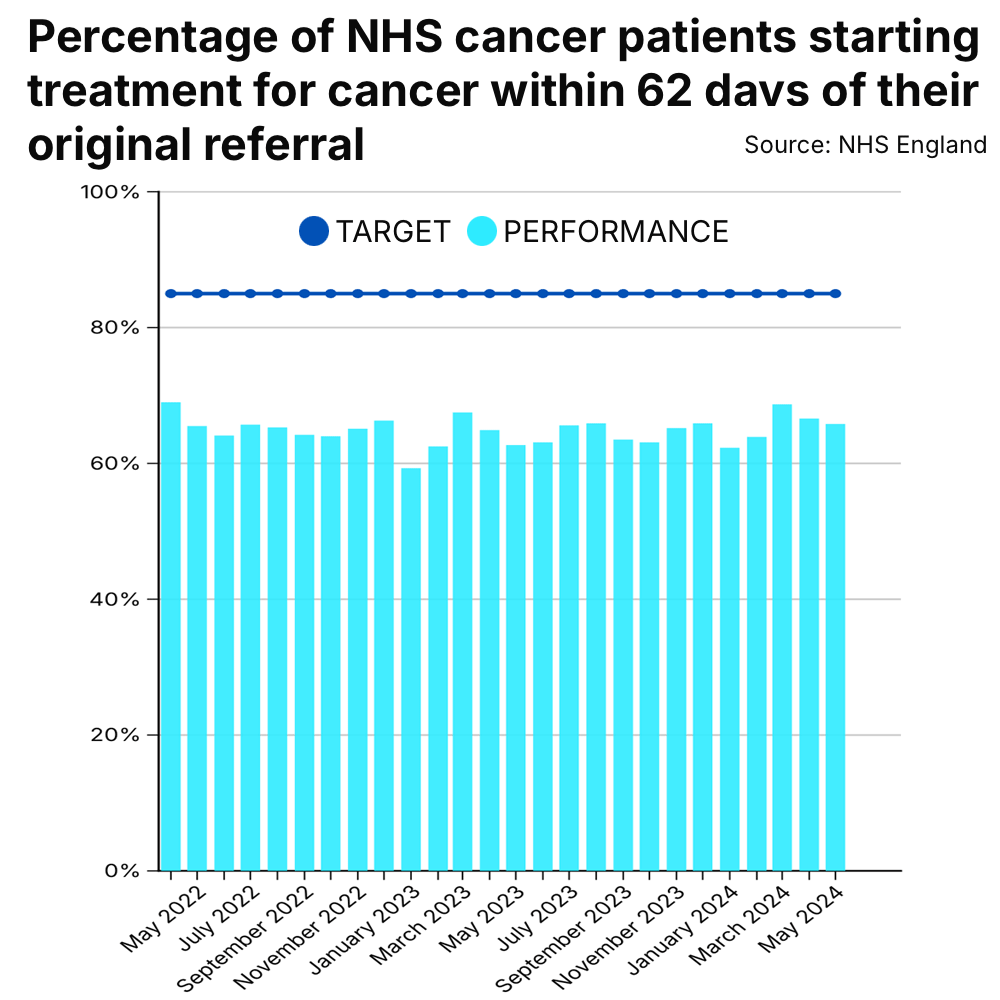
Health News – August 2024
8 August 2024Hello dear SCH News reader and welcome to your favourite health news round up! Trusting that you can drag yourself away from the Euros to have a read, exciting as it is, with England somehow still just about involved! Perhaps you’re waiting for the Olympics to start in France? Or maybe you’re recovering from the T20 cricket world cup from Barbados? And of course, some of our dear readers will do their level best to completely swerve this summer of sport – whatever you’re sporting, or not, disposition please enjoy issue no. 41;
3rd Sky News: – Nurses declare ‘national emergency’ as NHS patients treated in ‘cupboards and car parks’
Hospital patients are “dying in corridors”, nurses have warned as they declared a “national emergency” in the NHS. Patients are regularly treated on chairs in corridors for extended periods of time – and sometimes even days, the Royal College of Nursing (RCN) has said.
They are also receiving cancer diagnosis in public areas, and may to undergo intimate examinations there too, the union added. A survey of almost 11,000 frontline nursing staff across the UK shows the practice has become widespread, the RCN sai
When asked about their most recent shift, almost two in five reported delivering care in an inappropriate area, such as a corridor. Patient privacy and dignity has been compromised, almost seven in 10 said. “You wouldn’t treat a dog this way,” one nurse said. Another nurse recounted a patient with dementia being in a corridor for hours without oxygen.
They said: “When I arrived, she was in a wheelchair on a corridor with her daughter. She was extremely agitated, crying and confused. This care environment for any patient, never mind with dementia, was completely inappropriate.” The RCN’s acting general secretary, Professor Nicola Ranger, will declare a national emergency at the start of the union’s annual conference.
The organisation will also publish a report on clinical care in inappropriate areas. In order to show how widespread the practice has become, the RCN is calling for mandatory reporting of patients in car parks and store cupboards,” Prof Ranger will tell delegates. “The elderly are languishing on chairs for hours on end and patients are dying in corridors. The horror of this situation cannot be understated. It is a national emergency for patient safety and today we are raising the alarm.”
She will add: “Receiving a cancer diagnosis in a public area isn’t care. It’s a nightmare for all involved. We need to call it out as nursing staff, and health leaders and ministers need to take responsibility.” Corridor care is “symptom of a system in crisis,” the RCN’s report says, with patient demand in all settings, from primary to community and social care, outstripping workforce supply.
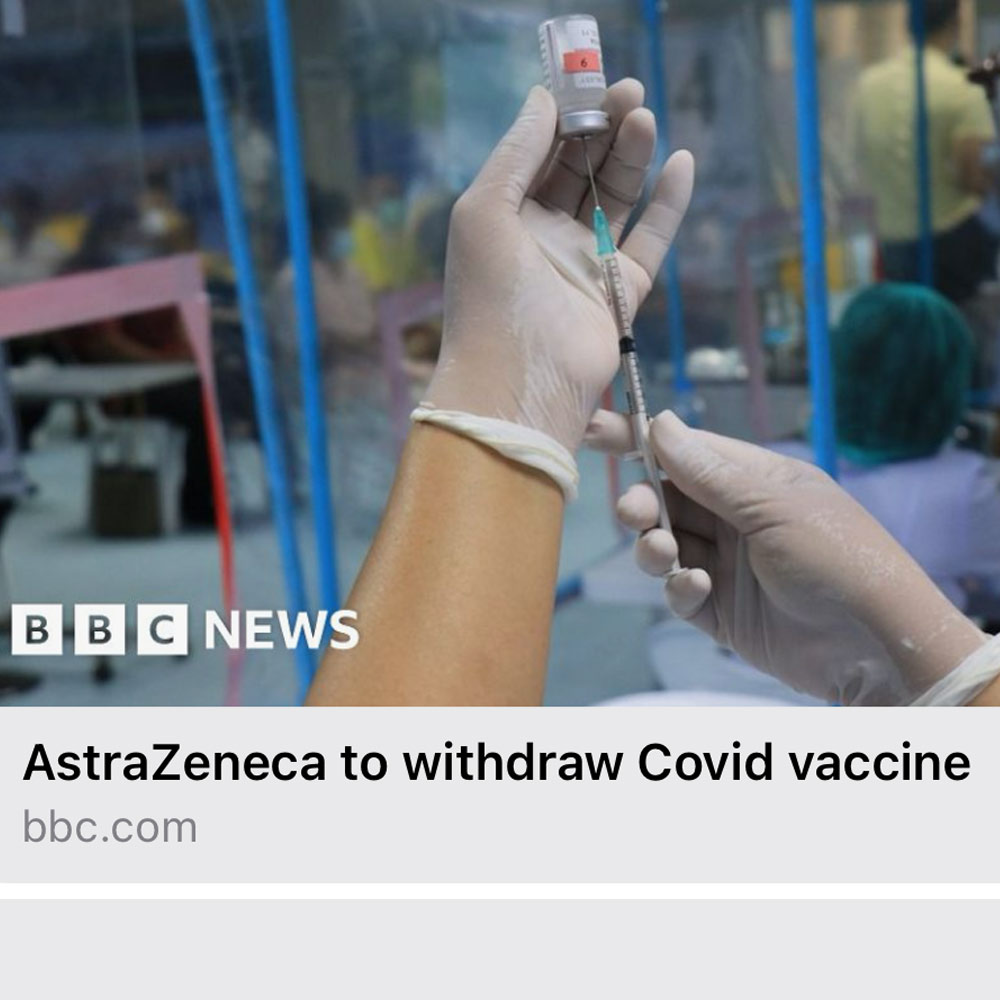
8th May BBC News – AstraZenica to withdraw Covid vaccine
After more than three billion doses, the Oxford-AstraZenica Covid vaccine is being withdrawn. AstraZenica said it was “incredibly proud” of the vaccine, but it had made a commercial decision. It said the rise of the new coronavirus variants meant demand had shifted to the newer updated vaccines.
Its vaccine was estimated to have saved millions of lives during the pandemic, but also caused rare, and sometimes fatal, blood clots. In the race to lift the world out of pandemic lockdowns, the Covid vaccine was developed by scientists at the University of Oxford in record time. A process that normally takes 10 years was accelerated down to about 10 months.
In November 2020, it was heralded as “a vaccine for the world” as it was far cheaper and easier to store than other Covid vaccines. The pharmaceutical giant AstraZeneca had agreed to manufacture it en masse. Initially, it was the cornerstone of the UK’s plan to vaccinate our way out of lockdown.
“The truth is it made an enormous difference, it was what lifted us out of the catastrophe that was unfolding at the time, combined with the other vaccine from Pfizer, said Prof Adam Finn, from the University of Bristol. However, its reputation was dented as unusual blood clots emerged as a rare side effect of the vaccine, and the UK turned to alternatives.
In a statement, AstraZenica said: “According to independent estimates, over 6.5 million lives were saved in the first year of use alone. Our efforts have been recognised by governments around the world and are widely regarded as being a critical component of ending the global pandemic.”
It said the development of new vaccines that more closely match the mutated forms of Covid that are now circulating meant there was a “surplus of available updated vaccines”, leading to a “decline in demand” for its vaccine which is “no longer being manufactured or supplied.”
Prof Finn added: “I think the withdrawal of the vaccine simply reflects it’s no longer useful. It’s turned out that this virus is very agile, and it’s evolved away from the original vaccines, so they have in a sense become irrelevant and only the reformulated vaccines are likely to be being used now.”
14th The Independent – What is preventative chemotherapy? Kate Middleton’s cancer treatment explained
The Princess of Wales has announced in a statement that she has been diagnosed with cancer after an incidental finding following abdominal surgery. Kate Middleton also said she was undergoing “preventative” chemotherapy. Chemotherapy is a term used to describe the treatment of someone diagnosed with cancer and is used to kill cancerous cells – although Kate specifically used the term preventative chemotherapy.
In a statement she said: “In January, I underwent major abdominal surgery in London and at the time, it was thought that my condition was non-cancerous. The surgery was successful. However, tests after the operation found cancer had been present. My medical team therefore advised that I should undergo a course of preventative chemotherapy and I am now in the early stages of that treatment.”
Preventative chemotherapy isn’t an official NHS term for a type of treatment and no further information has been given on Kate’s cancer, or the type of treatment she’s having. There are current treatments that exist called “chemoprevention” which lower the risk of getting cancer, or of it returning in healthy people. For example, it is currently used for people who have not developed breast cancer but are at increased risk of getting it due to their family history.
In 2021-2022 more than 320,000 people received treatment for cancer on the NHS including chemotherapy and radiotherapy. Chemotherapy medicines are used to kill cancer cells. The drugs disrupt the way cancer cells grow and divide and therefore stop the cancer cells from spreading in the body. According to specialists at The Royal Marsden, a cancer hospital in London, a chemotherapy called “adjuvant therapy” is something used to help destroy cancer cells that may remain after surgery or radiotherapy.”
Other types of chemotherapy include: neo-adjuvant therapy, which is given before surgery or radiotherapy to shrink the tumour; peri-operative therapy that is given both before and after surgery, and palliative, which is to help relieve symptoms if cancer has spread. According to the world Health Organisation there is a public health approach called “preventive chemotherapy”, which is used on whole populations, where large-scale medicines are administered to prevent certain diseases. These include lymphatic filariasis, commonly known as elephantiasis.
19th The Daily Telegraph – Britain 20 years behind Europe on cancer care
Cancer care in the UK lags 20 years behind other European countries, analysis shows. Survival rates for prostate, bowel, breast and cervical cancer are only just reaching levels that other nations achieved in the early 2000s, according to the most recent figures available.
Experts at Macmillan Cancer Support, which produced the analysis, said survival rates were “stuck in the noughties”, trailing decades behind countries such as Denmark and Norway. Improving cancer care has become a key political issue in the lead up to the general election, with both the Tories and Labour outlining how they plan to tackle mounting NHS backlogs as the health service struggles to meet patient treatment targets.
Earlier this week Wes Streeting, the shadow health secretary, who has had cancer, told The Daily T podcast that he had considered using private healthcare after finding a new lump should the wait on the NHS be too long. Gemma Peters, Macmillan Cancer Support’s chief executive officer, said: “Behind the shocking data are thousands of real people whose entire worlds have been turned upside down by cancer. The fact that some cancer survival rates are stuck in the noughties and are only just reaching levels that other European countries achieved in the early 2000s really hits home how far behind the UK is when it comes to cancer care.”
She urged the next UK government to prioritise a long-term strategy for cancer, adding: “Cancer care is at breaking point but this is a political choice.” The analysis found bowel cancer survival in England for women was years behind Sweden, where those diagnosed between 1997 and 2001 experienced better five-year survival rates than those in England who were diagnosed two decades later.
The survival data shows 57.6 per cent of women diagnosed with bowel cancer in England live for at least five years, but his figure is much higher elsewhere at72.7 per cent in Denmark, 71.7 per cent in Norway and 70.6 per cent in Sweden. Similarly, survival data from Scotland, Wales and Northern Ireland shows these countries are lagging 10 to 15 years behind Sweden and Norway.
When it comes to men, bowel cancer survival in England lags 15 years behind Sweden, while prostate cancer survival is a decade behind. England is achieving 57.6 per cent five-year bowel cancer survival rates, lower than the 73.2 per cent in Denmark, 70 per cent in Norway and 69.4 per cent in Sweden.
Prostate cancer five-year survival in England is at 88.5 per cent, bit is higher in Sweden at 95 per cent, 94.8 per cent in Norway and 90.2 per cent in Denmark. Breast cancer survival in England is also a decade behind Sweden and Denmark, while Scotland and Northern Ireland are a decade behind Sweden.
Cervical cancer survival in England is 25 years behind Norway, which achieved higher survival between 1992 and 1996 than England has now.
Research by University College London found that cancer patients in the UK were far les likely than people in other countries to receive chemotherapy or radiotherapy. Studies have also found GPs in the UK are less likely to investigate symptoms that could mean cancer is present. The situation has worsened since the pandemic, when swathes of surgery were stopped, creating a backlog.
An NHS spokesman said it was treating “record numbers of people”, with more people diagnosed at an earlier stage, and survival rates in England at a high. They said it was “transforming” screening including lung checks in supermarket car parks, at home bowel cancer tests and AI to spot skin cancer.
*******************************************
So there you have it good people, another round up of the some of the health headlines from the past month. Enjoy the closing stages of the football, as things gear up for the Olympic Games in France – And remember to not just view these athletic events vicariously, but to get involved in regular cardiovascular exercise activity yourself! You might take a daily walk, run or jog a 5k a few times a week, a cycle ride in a more rural area of your neighbourhood, maybe a swim if you live near a fresh water lake or the coast, a game of tennis or badminton with family or friends, 9 / 18 holes on the golf course, some paddle-boarding or get involved with local clubs and associations with games like 5-aside / 11-aside football, basketball or netball, cricket or hockey – Apologies if I’ve left your ‘go-to’ sport out!
Until August, take care and enjoy the summer!
Your sincerely
Daniel Donoghue
MD, Surrey Circle Health